
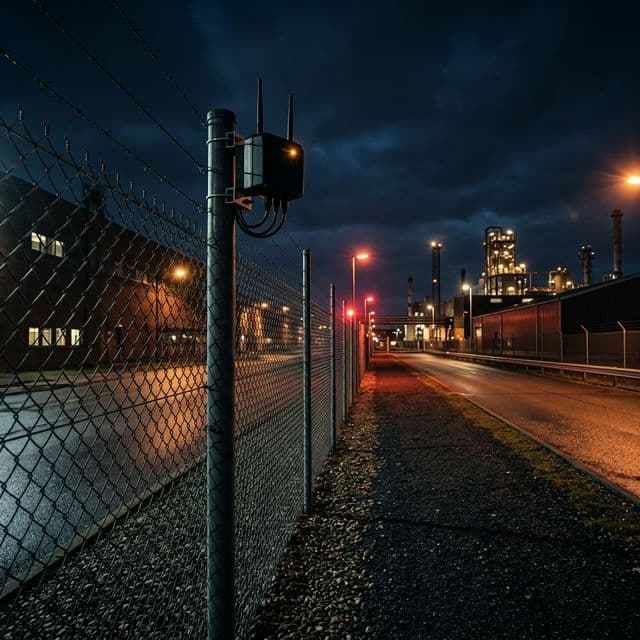
Detect Threats Before They Reach Your Fence
Radar-based perimeter detection operates in zero visibility — fog, dust, snow, or total darkness — and triggers camera verification automatically. Multiple radar configurations available for different range requirements.
FALSE ALARMS
Most traditional alarm activations are false — caused by animals, weather, or vegetation — costing U.S. law enforcement over $1.5 billion annually
VISIBILITY
Radar-based intrusion detection operates in conditions where cameras fail — fog, dust, snow, total darkness. Multiple radar configurations available for different range requirements
DETECTION RANGE
Axis radar detects people at 200 feet and vehicles at 280 feet with 180-degree coverage per unit — multiple units network for full perimeter coverage
The Challenge
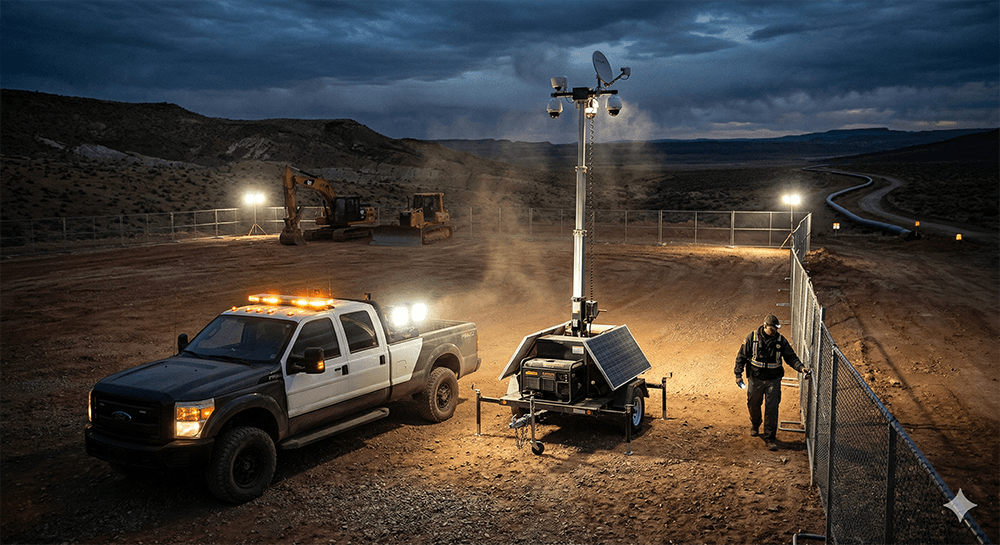
Your perimeter is only as strong as your ability to see what is approaching it. And cameras have a fundamental limitation: they need light, clear air, and line of sight. Fog rolls in. Dust storms blow across the site. Snow cuts visibility to zero. Darkness falls. Your cameras go blind — but threats don't stop.
That is why RadiusVision deploys radar as the primary detection layer. Radar doesn't care about visibility. It detects motion at distances cameras can't match, in conditions cameras can't handle. When radar picks up a target, it triggers PTZ cameras to slew automatically to the target's position, lock on, and track — giving operators confirmed visual evidence in seconds, not minutes.
The result: your perimeter alerts you to real threats earlier, with fewer false alarms, in conditions that render camera-only systems useless.
Technology: What Makes It Work
Radar Detection Systems
Ground radar covers your perimeter in any visibility condition. Detects people, vehicles, and movement patterns. Operates through fog, dust, heavy rain, snow, and total darkness. No illumination required — zero light signature means intruders don't know they've been detected. Multiple radar configurations available for different range requirements. Radar systems can be solar-powered and wirelessly connected for off-grid perimeter protection.
AI Video Analytics
Deep-learning AI classifies radar detections in real time. Person, vehicle, animal, debris — each target type triggers different response protocols. AI reduces false alarm rates by filtering out wildlife, blowing debris, and environmental motion. Only verified threats reach operators.
PTZ Camera Auto-Tracking (Slew-to-Cue)
When radar detects a target, PTZ cameras slew automatically to the target coordinates, lock on, and track movement across the perimeter. Operators see a zoomed-in, verified visual within seconds of initial radar detection — not a wide-angle overview, but a close-up of exactly who or what triggered the alert. High-zoom PTZ cameras can read a license plate at 1,200 feet.
Active Deterrence
Speakers and strobe lights activate on confirmed threats. A loud, clear verbal warning — delivered live by a monitoring operator or triggered automatically — stops the majority of trespassing attempts before escalation. Active deterrence turns detection into prevention.
How It Works
Radar Detects Motion
Ground radar continuously scans your perimeter in zero-visibility conditions. When an object enters the detection zone, radar captures its position, speed, direction, and size.
AI Classifies the Threat
The radar detection triggers AI video analytics on paired cameras. Deep-learning algorithms classify the target: person, vehicle, animal, or environmental motion.
Camera Locks On and Tracks
PTZ cameras automatically slew to the target coordinates provided by radar. The camera zooms in, locks on, and tracks the target as it moves.
Operator Verifies and Responds
A trained monitoring operator receives the verified alert with live video, radar track data, and AI classification. Response options include on-site speakers, strobe lights, and law enforcement dispatch.
We design, engineer, and assemble complete surveillance systems in-house — not resold off-the-shelf cameras on a pole. Every system is built for the specific conditions it will face.
— Jeff Sandine
CEO & Founder, RadiusVision
Frequently Asked Questions
Have a question not answered here? Our specialists are ready to help.
Your Cameras Can't See in the Dark. Radar Can.
Tell us about your perimeter — size, terrain, visibility challenges — and we'll design a detection system that doesn't go blind when conditions get bad.